
Order Now, Ships Today
One-time
Optional add-on for reconstitution workflow.
| Quantity | Discount | Discounted price |
| 3 - 4 | 5% | $88.95 |
| 5 - 6 | 7% | $88.95 |
| 7 - 8 | 9% | $88.95 |
| 9 + | 11% | $88.95 |

These products are for laboratory research only and not intended for medical use. They are not FDA-approved to diagnose, treat, cure, or prevent any disease. By purchasing, you certify they will be used solely for research and not for human or animal consumption.
GLOW is a multi-peptide research blend containing BPC-157, TB-500 and GHK-Cu. The combination provides an experimental platform for studying cellular migration, angiogenic signaling, extracellular-matrix regulation, copper-dependent pathways and related cellular processes under controlled laboratory conditions.
This research peptide blend is verified for 99%+ purity. COA: BPC-157 + TB-500 + GHK-Cu (10/10/50mg)

Products from Elite Miami Peptides do not include usage instructions, as they are strictly for in vitro research and prohibited by law for human or animal use. Misuse or unlawful application will result in permanent denial of service.
Each vial contains the quantity of lyophilized research material indicated on the product label. Refer to the lot-specific Certificate of Analysis for identity and purity information.
Yes. All peptides are supplied in lyophilized powder form and do not come reconstituted. Any extra materials required for research, such as solvents or diluents, must be obtained separately.
When stored as a dry powder, peptides remain stable for up to 2 years.
Once reconstituted, the solution should be kept refrigerated and is typically stable for up to 2 months under proper storage conditions.
The GLOW Blend provides a complementary research model of cellular signaling through three distinct mechanisms: BPC-157 – Studied in relation to fibroblast migration, growth-factor signaling (VEGF), and angiogenesis in soft-tissue models. TB-500 – Studied in relation to actin polymerization, cellular movement and capillary-formation models. GHK-Cu – Acts as a copper carrier peptide studied in relation to collagen synthesis, superoxide dismutase activity, and extracellular-matrix regulation. Collectively, the blend offers a multifactorial model for studying epithelial closure, vascular signaling, and inflammatory-mediator balance at the cellular level.
Simply put, GLOW combines three well-known research peptides that scientists use to study cellular signaling. BPC-157 helps examine how tissue models respond and blood vessels form. TB-500 aids research on cell movement in muscle or tendon tissue models. GHK-Cu supports studies of skin, collagen, and antioxidant mechanisms. Together, they make a laboratory model for understanding how cells signal and organize—not for human or animal use.
⚠️ Disclaimer: this product is not approved for medical use and is not intended to diagnose, treat, or prevent any disease. All information provided is for educational and research purposes only, and this product must never be used in humans or animals.
The GLOW blend was formulated by combining three of the most referenced peptides in extracellular-matrix research—BPC-157, TB-500, and GHK-Cu—each discovered in separate eras of biochemical exploration. BPC-157 was identified in the early 1990s from human gastric juice as a partial sequence of Body Protection Compound, studied in relation to angiogenesis and collagen signaling in pre-clinical models. TB-500, a synthetic fragment of Thymosin Beta-4, was isolated in the 1960s from thymic tissue and later synthesized to study actin regulation and cellular-migration pathways. GHK-Cu, discovered in 1973 by Dr. Loren Pickart, was the first tripeptide shown to bind copper ions and interact with dermal-remodeling, antioxidant and inflammatory-signaling processes. The GLOW formulation unites these discoveries into a single experimental model that allows researchers to study multi-pathway cellular signaling, angiogenesis, and oxidative-stress modulation. (Adapted from Pickart L. et al., 1973; Goldstein A.L. et al., 2004; Sikiric P. et al., 1993.)
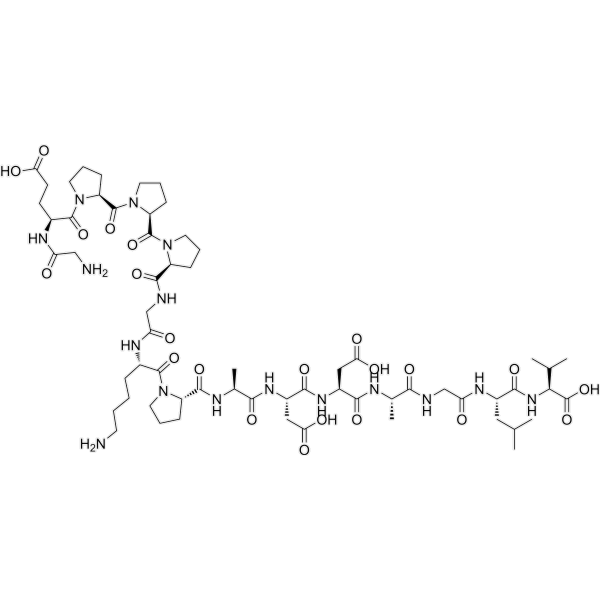
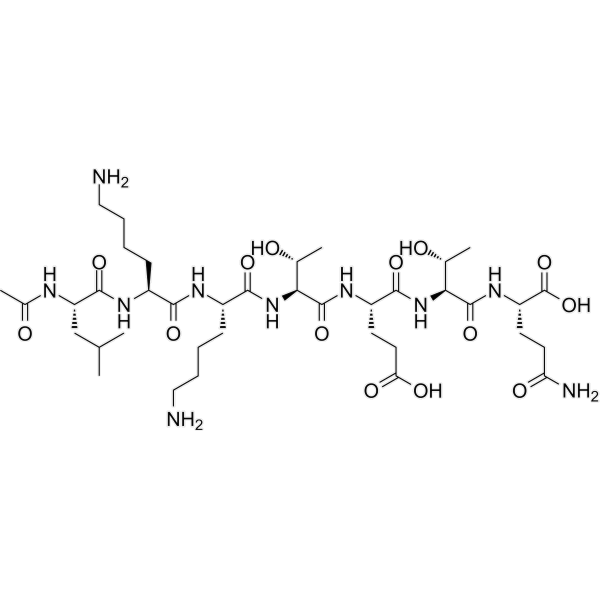
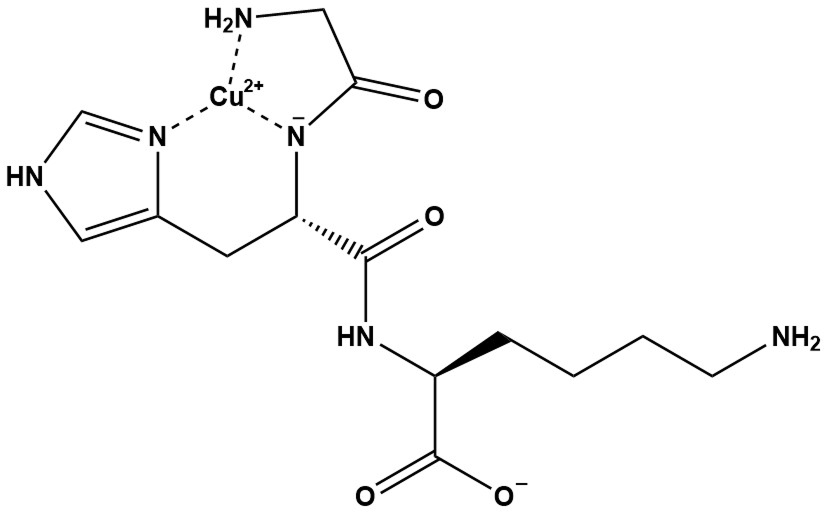
BPC-157 Molecular Formula: C₆₂H₉₈N₁₆O₂₂ Molecular Weight: 1,419.54 g/mol Sequence Length: 15 amino acids (Pentadecapeptide) Sequence: Gly-Glu-Pro-Pro-Pro-Gly-Lys-Pro-Ala-Asp-Asp-Ala-Gly-Leu-Val TB-500 (Thymosin Beta-4 Fragment) Molecular Formula: C₂₁₄H₃₄₅N₅₅O₆₄S Molecular Weight: 4,926 g/mol Sequence Length: 43 amino acids (active N-terminal fragment of Thymosin β-4) GHK-Cu (Copper Tripeptide) Molecular Formula: C₁₄H₂₄CuN₆O₄ Molecular Weight: 403.87 g/mol Sequence: Gly-His-Lys (chelating copper ion Cu²⁺) PubChem ID: CID 5311472
Experimental research across these peptides examines: Angiogenesis and fibroblast proliferation models (BPC-157 + TB-500). Epithelial-closure models with combined cellular migration. Collagen and elastin synthesis pathways (GHK-Cu). Inflammatory cytokine and oxidative-stress markers when combined in vitro. These characteristics make the GLOW Blend a compound set used in extracellular-matrix and cellular-signaling scientific studies.
This blend combines three peptides that are each studied in relation to different cellular processes. BPC-157 is examined in tendon and muscle tissue models, TB-500 in blood vessel formation and cell movement models, and GHK-Cu in collagen and antioxidant activity studies. Together, they are studied for cellular migration, vascular signaling, and inflammatory-mediator research.
Pickart L. (2015). GHK-Cu peptide and its biological roles in tissue regeneration. Goldstein A.L., et al. (2004). Thymosin Beta-4 and angiogenesis mechanisms in recovery studies. Stribling W., et al. (2020). Comparative models of BPC-157 and TB-500 in tissue repair. Pentecost C., et al. (2021). Synergistic peptide modulation in regenerative biology.
AHK-Cu
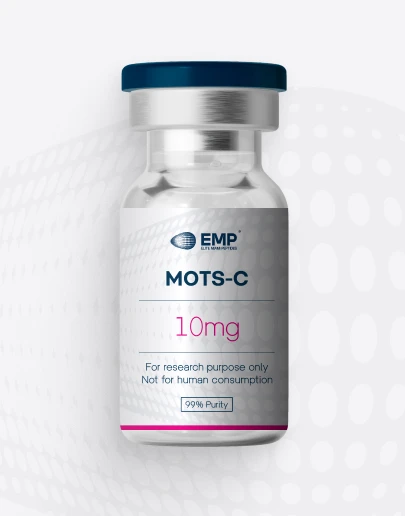
MOTS-C Peptide
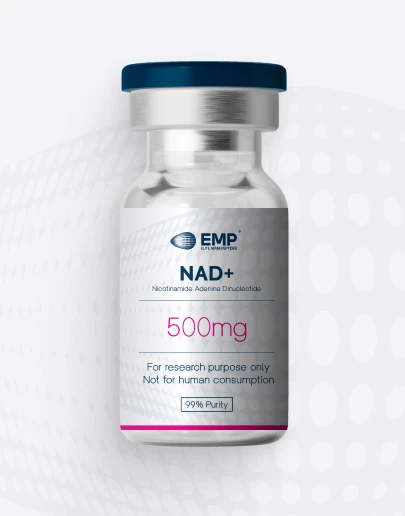
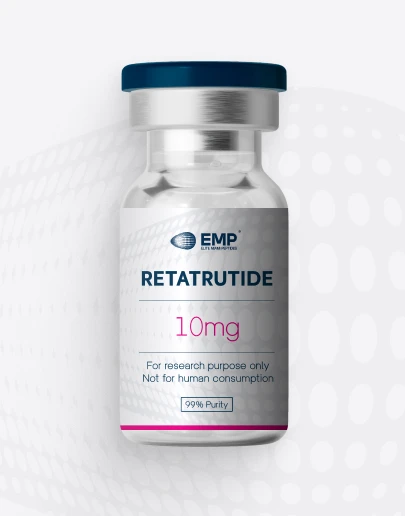
Retatrutide Peptide
Our specialists respond within minutes to any order or product inquiry.
These products are for laboratory research only and not intended for medical use. They are not FDA-approved to diagnose, treat, cure, or prevent any disease. By purchasing, you certify they will be used solely for research and not for human or animal consumption.
All compounds from Elite Miami Peptides are intended strictly for laboratory research purposes.
They are not for human use, consumption, or therapeutic applications.
Products are supplied exclusively to qualified professionals working in compliance with all applicable laws and regulations.

