

The Elite Miami Peptides research blog examines the molecular mechanisms, recent in vitro studies, and cellular pathways of leading peptide compounds. This article focuses on one of the most extensively researched carrier peptides in dermatological and regenerative science: GHK-Cu (Copper Tripeptide-1).
Introduction to GHK-Cu
Since its discovery in human plasma in 1973 by Dr. Loren Pickart, the tripeptide Glycyl-L-Histidyl-L-Lysine (GHK) has captivated the scientific community. While it naturally occurs in human saliva, urine, and blood, its concentration declines sharply with age, from about 200 ng/mL at age 20 to around 80 ng/mL by age 60.
GHK is of particular interest to researchers due to its strong affinity for copper ions (Cu2+). When complexed with copper, it forms GHK-Cu, a potent carrier peptide that significantly influences tissue remodeling, extracellular matrix (ECM) generation, and cellular repair. Understanding its cellular function requires examination of its binding properties and its effects in ex vivo skin explant models.
The Molecular Architecture: Binding Properties of GHK-Cu
The biological efficacy of GHK-Cu is inextricably linked to its structural biochemistry. GHK is classified as a “carrier peptide” because it acts as a highly efficient delivery vehicle for copper, a trace element essential for human biology.
1. High-Affinity Copper Chelation: The GHK sequence contains specific nitrogen and oxygen atoms that create a perfect molecular pocket for a single Copper (II) ion. The binding occurs primarily at the histidine residue, forming a stable, yet reversible, coordination complex. This reversibility is critical; it allows the peptide to transport copper through the interstitial fluid, releasing it directly into target cells or transferring it to vital cellular enzymes.
2. Enzymatic Activation: Copper is a required cofactor for numerous enzymes involved in tissue regeneration. One of the most important is lysyl oxidase, an enzyme that cross-links collagen and elastin fibers. By efficiently delivering copper to the cellular environment, GHK-Cu ensures that enzymes like lysyl oxidase have the necessary cofactors to structurally stabilize newly synthesized collagen networks.
Investigating Efficacy: Why Skin Explants?
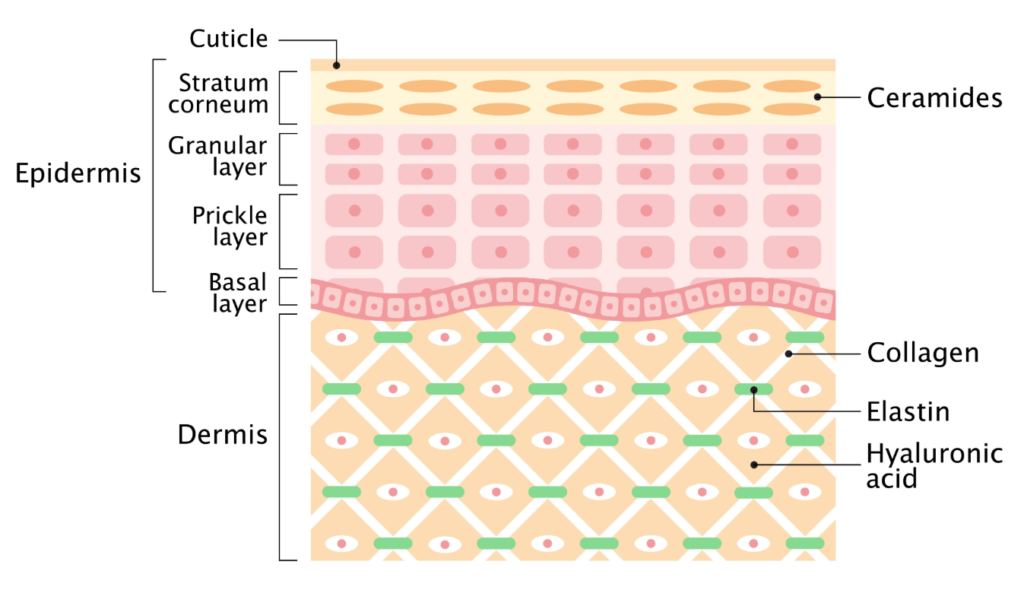
Standard two-dimensional (2D) cell cultures, such as fibroblast growth in petri dishes, are useful for initial toxicity and efficacy screenings. However, they do not replicate the complex three-dimensional (3D) architecture of living tissue.
Skin explants, which are intact pieces of human tissue maintained ex vivo in specialized culture media, provide an accurate model for dermatological research. These explants preserve the epidermis, the dermal-epidermal junction, and the dermis, as well as the native cellular interactions between keratinocytes and fibroblasts. Consequently, skin explants are considered the gold standard for observing the biological effects of compounds such as GHK-Cu.
Effects of GHK-Cu on Collagen Synthesis in Explant Models
Application of GHK-Cu to skin explant models demonstrates a biphasic approach to skin remodeling. The compound facilitates the breakdown of damaged tissue and promotes the synthesis of new, healthy tissue architecture.
1. Upregulation of Collagen mRNA: Studies utilizing skin explants have shown that exposure to GHK-Cu significantly upregulates the mRNA expression for both Type I and Type III collagen.
- Type I collagen provides the structural rigidity and tensile strength of the dermis.
- Type III collagen is typically found in high concentrations during the early phases of tissue development and granulation tissue during the early phases of wound healing.
2. Modulation of the MMP/TIMP Pathway: Collagen remodeling involves both the synthesis of new proteins and the removal of old, cross-linked, and damaged proteins, which often result from photodamage or glycation. GHK-Cu has been observed to modulate the activity of Matrix Metalloproteinases (MMPs), enzymes responsible for breaking down ECM proteins, and their natural inhibitors, tissue inhibitors of metalloproteinases (TIMPs). By regulating this pathway, GHK-Cu prepares the dermal matrix for the deposition of newly organized collagen bundles.
3. Enhancement of the Extracellular Matrix (ECM): Beyond collagen, skin explant histology reveals that GHK-Cu stimulates the production of other vital ECM components, including elastin, decorin, and glycosaminoglycans (GAGs) like hyaluronic acid. This comprehensive ECM expansion results in measurable increases in dermal thickness and improved structural integrity within the explant samples.
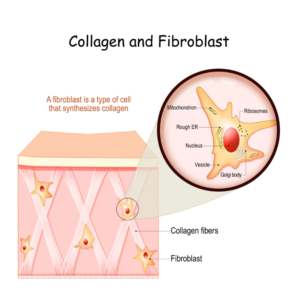
Collagen and fibroblast
The Bottom Line for Researchers
In summary, current literature characterizes GHK-Cu as a master modulator. Its unique binding properties allow safe copper transport to target cells, supporting regenerative processes. In skin explant models, GHK-Cu not only enables the breakdown of damaged tissue but also stimulates the synthesis of foundational proteins, such as Type I and III collagen. dermatological, cellular senescence, and tissue regeneration research. As research in this field progresses, targeted peptide pharmacology in advancing ex vivo tissue regeneration models.
Elevate Your Research with Elite Miami Peptides
Accurate research requires the use of high-purity compounds. Elite Miami Peptides is committed to supplying the scientific community with rigorously tested peptides to support the integrity of in vitro and ex vivo studies.
GHK-Cu from Elite Miami Peptides is synthesized to meet the highest standards of purity and stability, supporting research in ECM remodeling, fibroblast proliferation, and localized copper delivery.
Explore our catalog and secure high-purity GHK-Cu for your laboratory today at Elite Miami Peptides.
Disclaimer: The products offered by Elite Miami Peptides are strictly for laboratory research purposes only. They are not intended for human consumption, diagnostic, therapeutic, or clinical use. All information provided in this article is for educational and informational purposes based on current scientific literature.