Order Now, Ships Today
One-time
Optional add-on for reconstitution workflow.
| Quantity | Discount | Discounted price |
| 3 - 4 | 5% | $58.95 |
| 5 - 6 | 7% | $58.95 |
| 7 - 8 | 9% | $58.95 |
| 9 + | 11% | $58.95 |

These products are for laboratory research only and not intended for medical use. They are not FDA-approved to diagnose, treat, cure, or prevent any disease. By purchasing, you certify they will be used solely for research and not for human or animal consumption.
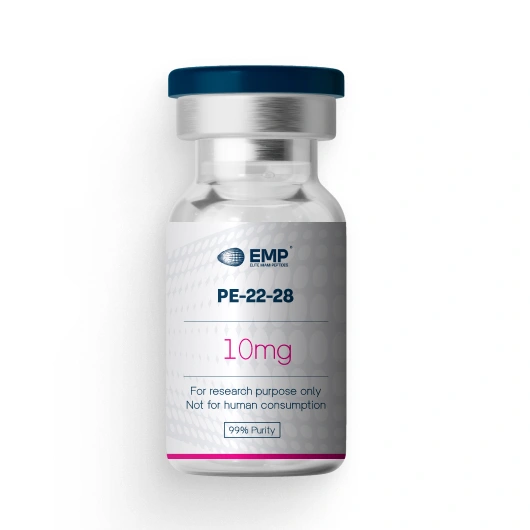
PE-22-28 is a research-grade synthetic heptapeptide developed for laboratory investigation of TREK-1 potassium channel modulation and neurocognitive signaling pathways. This compound selectively antagonizes the TREK-1 channel, making it a valuable tool for studying neuronal excitability, neurogenesis, and hippocampal plasticity in experimental models. Current research focuses on understanding how selective TREK-1 inhibition influences mood-related signaling, ion channel activity, and neuroprotective mechanisms under controlled laboratory conditions. PE-22-28 is classified as a next-generation neurocognitive research peptide and is supplied strictly for research use only.
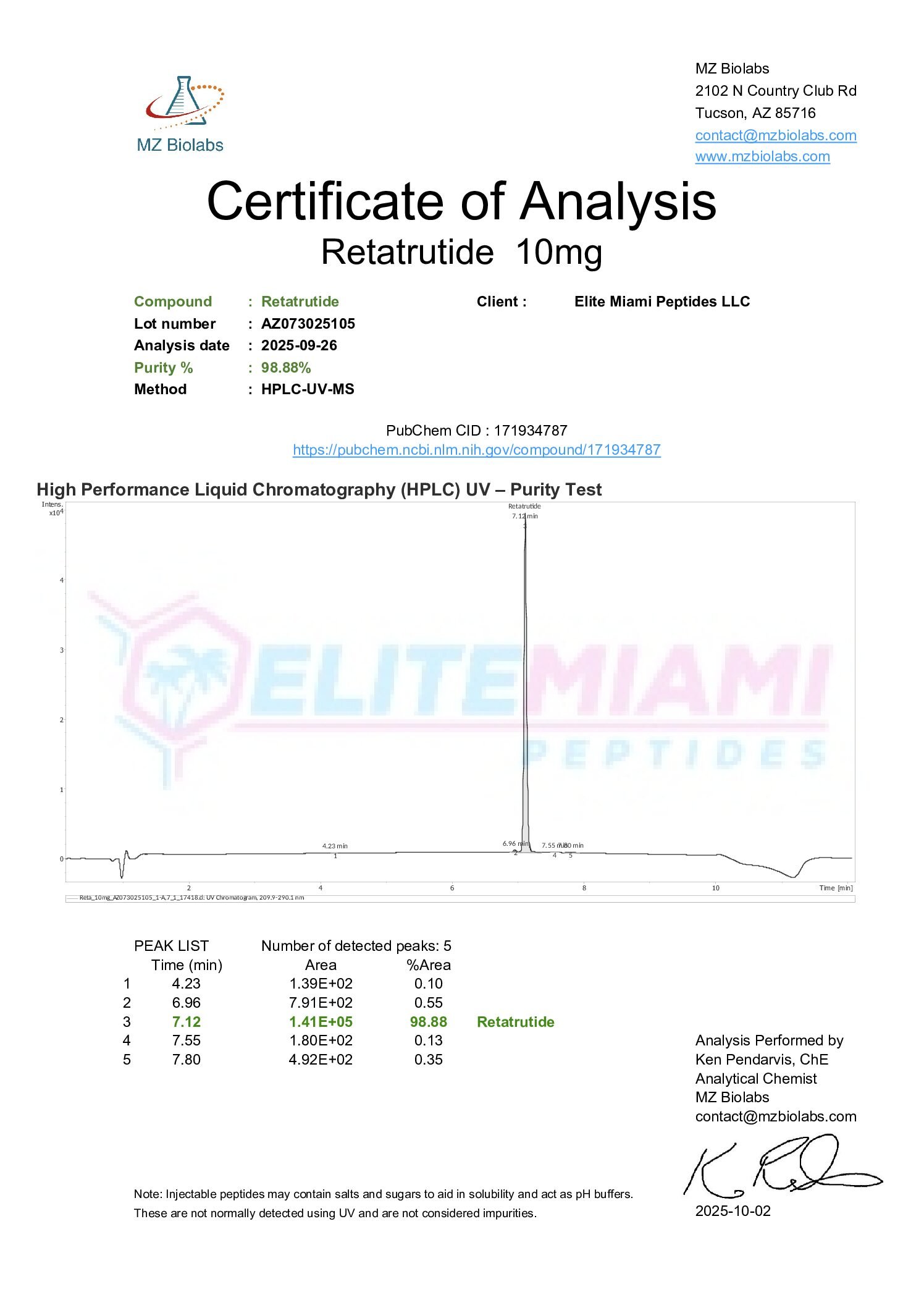
This research peptide is verified for 99%+ purity. Certificate: COA: PE-22-28 (10 mg)

Products from Elite Miami Peptides do not include usage instructions, as they are strictly for in vitro research and prohibited by law for human or animal use. Misuse or unlawful application will result in permanent denial of service.
Each vial contains the quantity of lyophilized research material indicated on the product label. Refer to the lot-specific Certificate of Analysis for identity and purity information.
Yes. All peptides are supplied in lyophilized powder form and do not come reconstituted. Any extra materials required for research, such as solvents or diluents, must be obtained separately.
When stored as a dry powder, peptides remain stable for up to 2 years.
Once reconstituted, the solution should be kept refrigerated and is typically stable for up to 2 months under proper storage conditions.
PE-22-28 is a laboratory research peptide being studied for its selective interaction with the TREK-1 potassium channel and related neurocognitive signaling pathways. In controlled research environments, this compound has been shown to antagonize TREK-1 activity, supporting investigations into neuronal excitability, hippocampal neurogenesis, synaptic plasticity, and mood-signaling mechanisms. Research involving PE-22-28 focuses on how selective TREK-1 modulation influences complex neurological pathways in experimental models. These studies are limited to laboratory and preclinical settings, and no conclusions regarding safety, efficacy, or application have been established.
PE-22-28 is a synthetic heptapeptide studied in research settings for how it selectively interacts with the TREK-1 potassium channel and related neurocognitive signaling pathways. These pathways are associated with neuronal excitability, neurogenesis, synaptic plasticity, and mood-signaling processes in experimental models. Researchers are interested in this compound because its selective TREK-1 antagonism provides a precise tool for studying ion channel modulation and neuronal feedback mechanisms in controlled laboratory environments. All research involving this compound is limited to experimental models.
⚠️ Disclaimer: this product is not approved for medical use and is not intended to diagnose, treat, or prevent any disease. All information provided is for educational and research purposes only, and this product must never be used in humans or animals.
The development of PE-22-28 builds upon years of research into the TREK-1 potassium channel and its role in neurocognitive signaling. Earlier studies identified spadin as a naturally occurring peptide capable of selectively blocking TREK-1, leading researchers to investigate its effects on neuronal activity, neurogenesis, and mood-related pathways. PE-22-28 expands on this research as a shorter, more stable, and more selective analog of spadin. This optimized design represents an advancement in the study of TREK-1 modulation and neuroplasticity in controlled laboratory environments.
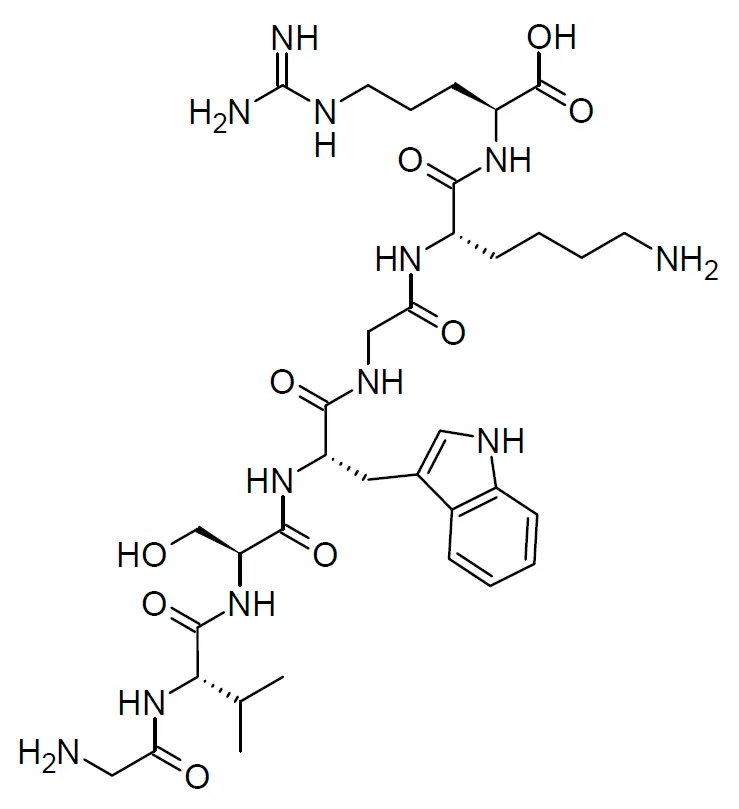
Molecular Formula: C₃₅H₅₅N₁₁O₉ Molecular Weight: 773.89 g/mol Sequence Length: 7 amino acids Sequence: Gly-Val-Ser-Trp-Gly-Leu-Arg PubChem ID: CID 165437303
PE-22-28 has been studied in preclinical and neuroscience research models for its selective interaction with the TREK-1 potassium channel. Its ability to antagonize TREK-1 has made it a subject of interest in neuroplasticity, ion channel modulation, and mood-signaling research. Primary Research Observations (Laboratory Context): • TREK-1 Modulation: Selective antagonism of the TREK-1 potassium channel • Neuroplasticity Research: Investigation of hippocampal neurogenesis and synaptic plasticity mechanisms • Neuronal Signaling: Use in studying ion channel activity, neuronal excitability, and mood-related pathways in experimental models Overall, laboratory data suggests that PE-22-28 may serve as a valuable compound for studying TREK-1 signaling, neuroplasticity, and complex neuronal interactions under controlled research conditions.
In simple terms, PE-22-28 is being studied for how it selectively blocks the TREK-1 potassium channel in laboratory settings. This channel is associated with neuronal signaling, neurogenesis, and mood-related processes in the brain. Because it provides precise and selective TREK-1 antagonism, researchers use this compound to explore how ion channel activity influences neuron growth, synaptic plasticity, and signaling pathways in controlled experimental models. All findings are limited to research environments.
Mazella, J. et al. (2010). Spadin, a sortilin-derived peptide, is a potent endogenous blocker of the TREK-1 potassium channel and exhibits antidepressant-like activity. Proceedings of the National Academy of Sciences (PNAS). Djillani, A. et al. (2017). Development of PE-22-28, a shortened and stabilized spadin analog with enhanced TREK-1 affinity and prolonged biological activity. Scientific Reports.
Cerebrolysin

Our specialists respond within minutes to any order or product inquiry.
These products are for laboratory research only and not intended for medical use. They are not FDA-approved to diagnose, treat, cure, or prevent any disease. By purchasing, you certify they will be used solely for research and not for human or animal consumption.
All compounds from Elite Miami Peptides are intended strictly for laboratory research purposes.
They are not for human use, consumption, or therapeutic applications.
Products are supplied exclusively to qualified professionals working in compliance with all applicable laws and regulations.