Order Now, Ships Today
One-time
Optional add-on for reconstitution workflow.
| Quantity | Discount | Discounted price |
| 3 - 4 | 5% | $64.95 |
| 5 - 6 | 7% | $64.95 |
| 7 - 8 | 9% | $64.95 |
| 9 + | 11% | $64.95 |

These products are for laboratory research only and not intended for medical use. They are not FDA-approved to diagnose, treat, cure, or prevent any disease. By purchasing, you certify they will be used solely for research and not for human or animal consumption.
IGF-1 LR3 is a synthetic analog of insulin-like growth factor 1 engineered with structural modifications that alter its interaction with IGF-binding proteins. It is studied experimentally in relation to IGF-1 receptor signaling, cellular proliferation, protein-synthesis pathways, glucose transport and related molecular processes.
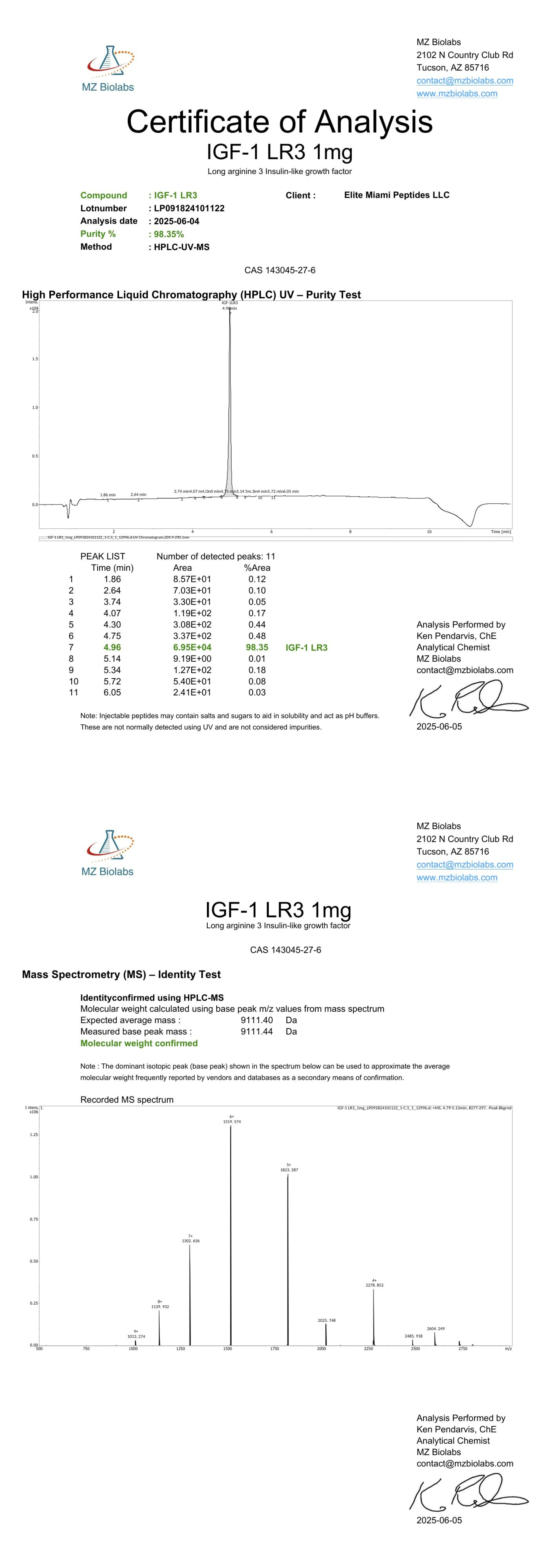
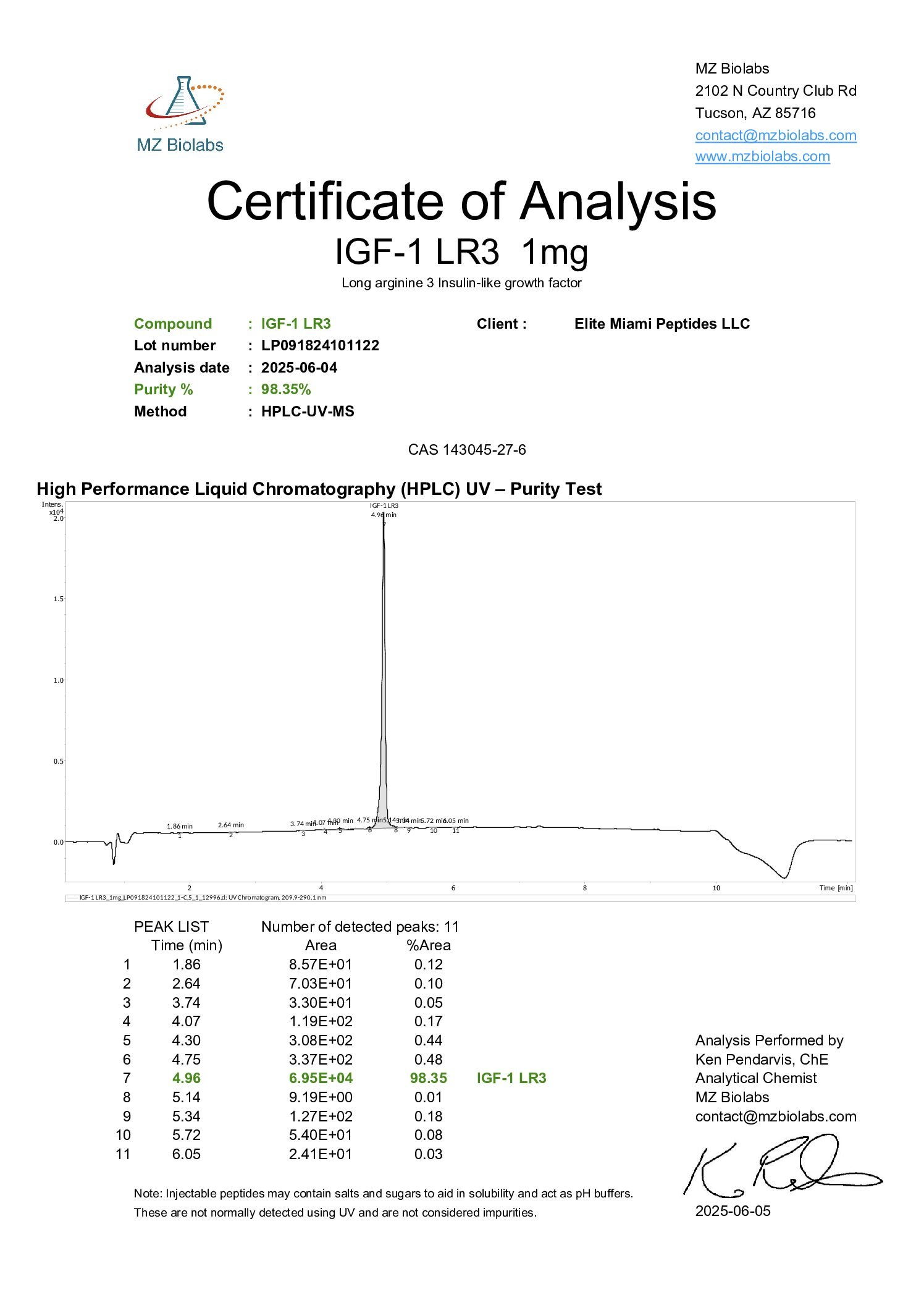
This research peptide is verified for 99%+ purity. COA: IGF-1 LR3 (1mg)

Products from Elite Miami Peptides do not include usage instructions, as they are strictly for in vitro research and prohibited by law for human or animal use. Misuse or unlawful application will result in permanent denial of service.
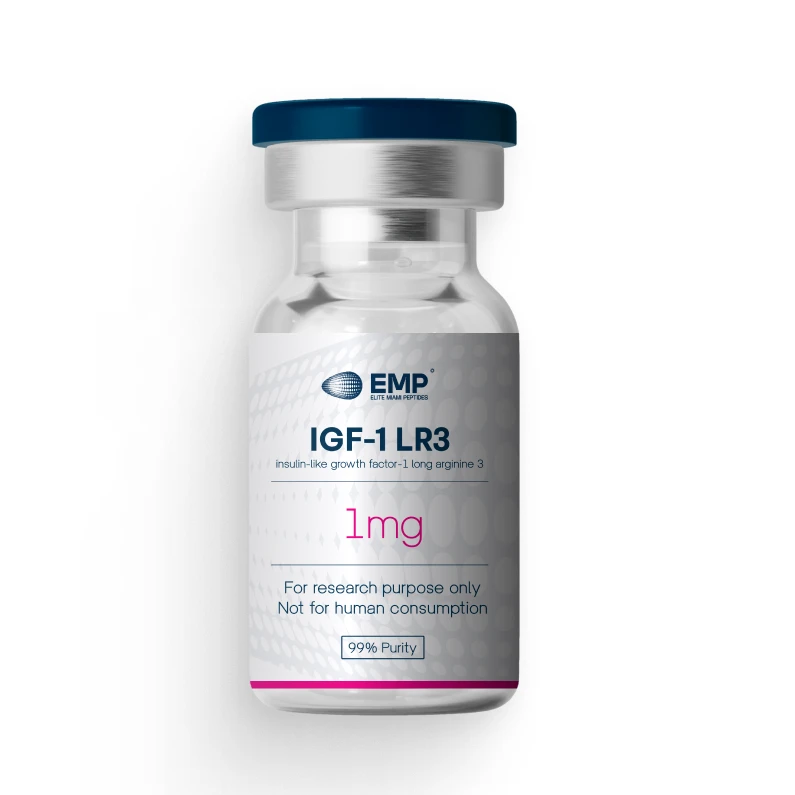
Each vial contains the quantity of lyophilized research material indicated on the product label. Refer to the lot-specific Certificate of Analysis for identity and purity information.
Yes. All peptides are supplied in lyophilized powder form and do not come reconstituted. Any extra materials required for research, such as solvents or diluents, must be obtained separately.
When stored as a dry powder, peptides remain stable for up to 2 years.
Once reconstituted, the solution should be kept refrigerated and is typically stable for up to 2 months under proper storage conditions.
IGF-1 LR3 is a long-acting growth factor analog that binds to IGF-1 receptors and activates signaling pathways related to cell proliferation and differentiation. It is often studied for its influence on myoblast activity and IGF-1 receptor signaling in experimental models. Researchers have also explored its ability to modulate glucose uptake and cell survival mechanisms through the PI3K/Akt pathway — making it a valuable peptide for studying cellular metabolism and receptor signaling.
IGF-1 LR3 is a longer-lasting version of the IGF-1 growth factor. Research looks at how it interacts with IGF-1 receptors, cell proliferation, and protein-synthesis pathways in laboratory models. It’s also studied for its role in glucose uptake and cellular energy pathways.
⚠️ Disclaimer: this product is not approved for medical use and is not intended to diagnose, treat, or prevent any disease. All information provided is for educational and research purposes only, and this product must never be used in humans or animals.
Engineered analog of human IGF-1 designed with an Arg at position 3 and an N-terminal 13-aa extension to reduce IGFBP binding and prolong activity. Wikipedia
Length: 83 amino acids (vs. 70 in native IGF-1) Molecular Formula (reported): C₄₀₀H₆₂₅N₁₁₁O₁₁₅S₉ Molecular Weight (reported): ~9.1 kDa CAS: 143045-27-6. Wikipedia+1
IGF-1 LR3 has been studied across molecular and cellular biology fields for its effects on: Cellular: myoblast proliferation, differentiation, and protein synthesis. Metabolic: glucose utilization and insulin signaling modulation. Molecular: activation of PI3K/Akt and MAPK pathways. Receptor: IGF-1 receptor binding and IGF-binding protein interaction. These findings indicate IGF-1 LR3’s importance as a model for understanding IGF-1 receptor signaling processes in scientific research.
In simple terms, IGF-1 LR3 is a lab-engineered version of the body’s natural growth factor, made to last longer in research settings. Scientists use it to study how cells proliferate, signal, and use energy. While an active area of laboratory research, IGF-1 LR3 is not approved for human or animal use — it is strictly for controlled laboratory research.
Bach L.A. (2018). IGF-binding proteins and IGF bioactivity regulation. Humbel R.E. (1990). Structure and function of insulin-like growth factors. Yakar S., et al. (2002). The role of IGF-1 in tissue growth and metabolism. Temmerman L., et al. (2015). Synthetic IGF-1 analogs and receptor signaling studies.
Our specialists respond within minutes to any order or product inquiry.
These products are for laboratory research only and not intended for medical use. They are not FDA-approved to diagnose, treat, cure, or prevent any disease. By purchasing, you certify they will be used solely for research and not for human or animal consumption.
All compounds from Elite Miami Peptides are intended strictly for laboratory research purposes.
They are not for human use, consumption, or therapeutic applications.
Products are supplied exclusively to qualified professionals working in compliance with all applicable laws and regulations.