
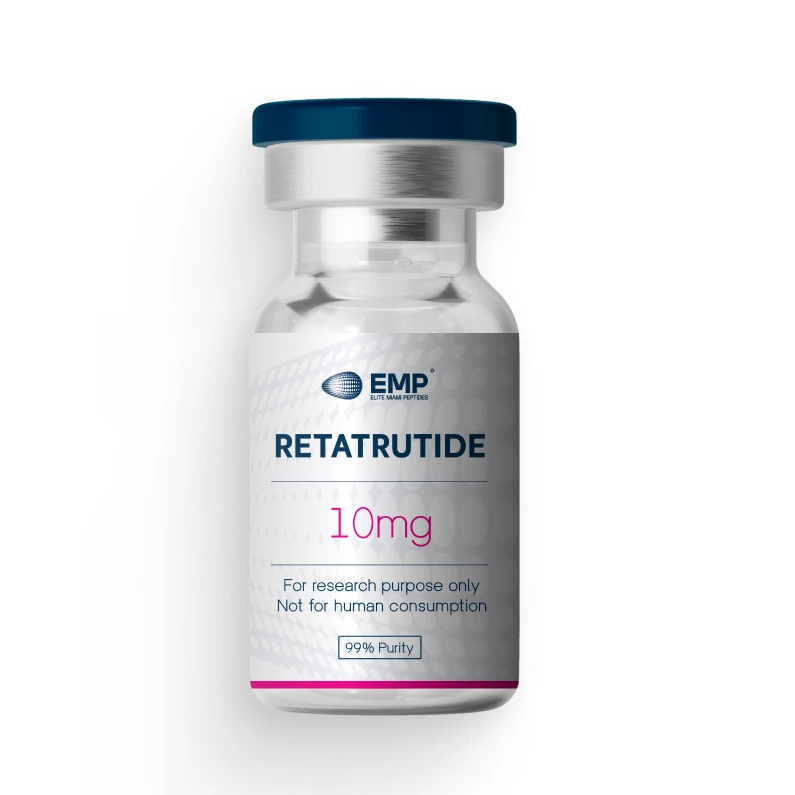
Retatrutide vs Semaglutide (Research Use Only)
Retatrutide and Semaglutide are two peptides that have been widely studied in metabolic and receptor interaction research models. While both compounds are often discussed in similar research categories, they differ significantly in structure, receptor activity, and research applications.
This page provides a neutral, research-focused comparison of Retatrutide vs Semaglutide for laboratory purposes only.
Key Research Differences Between Retatrutide and Semaglutide
Retatrutide and Semaglutide are both studied in metabolic and receptor-focused research models, but they differ significantly in their receptor interaction profiles. Semaglutide is a GLP-1 receptor agonist, while Retatrutide is studied as a multi-receptor agonist targeting GLP-1, GIP, and glucagon receptors.
Because of this broader receptor activity, Retatrutide is often examined in more complex metabolic research models where multiple signaling pathways are evaluated simultaneously. Semaglutide, by contrast, is typically used in more targeted GLP-1 pathway research.
Research Applications
In laboratory settings, both compounds may be used in studies related to metabolic signaling, receptor binding, and cellular response pathways. Researchers often compare these peptides to better understand how different receptor combinations influence outcomes in controlled environments.
It is important to note that all compounds referenced are intended strictly for laboratory research use only and are not approved for human or animal consumption.
Research Use Disclaimer
All compounds referenced are intended strictly for laboratory research use only. They are not approved for human or animal consumption and are not intended to diagnose, treat, cure, or prevent any disease.
Mechanism Overview (Research Context)
Retatrutide
Retatrutide is a multi-receptor peptide studied for its interaction with GLP-1, GIP, and glucagon receptors. Research models often examine its broader receptor activity and potential role in complex metabolic signaling pathways.
View Retatrutide for Sale (Research Use Only)
Semaglutide
Semaglutide is primarily studied as a GLP-1 receptor agonist. Research involving Semaglutide typically focuses on its role in receptor-specific pathways and metabolic regulation models.
View Semaglutide Peptide (Research Use Only)
Key Differences: Retatrutide vs Semaglutide(Research Perspective)
| Feature | Retatrutide | Semaglutide |
|---|---|---|
| Receptor Activity | Multi-receptor (GLP-1, GIP, glucagon) | GLP-1 receptor |
| Research Focus | Broader metabolic pathway models | Targeted receptor studies |
| Complexity | Multi-pathway interaction | Single pathway focus |
Research Applications
In laboratory environments, both peptides may be examined for their interaction with metabolic signaling pathways. Retatrutide is often explored in more complex multi-receptor models, while Semaglutide is commonly used in more targeted receptor-focused research settings.
Related Research Compounds
Researchers also explore compounds such as:
- BPC-157
- MOTS-c
- NAD+
Browse Peptides for Sale (Research Use Only)
Which Is More Suitable for Research?
The selection between Retatrutide and Semaglutide depends entirely on the research model, study design, and desired receptor interactions.
Researchers focused on broader multi-pathway analysis may explore compounds like Retatrutide, while those focusing on specific receptor pathways may evaluate compounds such as Semaglutide.
Choosing Between Retatrutide and Semaglutide for Research
When comparing Retatrutide vs Semaglutide in a research setting, the primary consideration is the scope of receptor interaction being studied. Retatrutide’s multi-receptor activity may make it more relevant in complex experimental models where multiple signaling pathways are analyzed simultaneously.
Semaglutide, with its more targeted GLP-1 receptor activity, is often evaluated in studies focused on isolated receptor pathways and controlled metabolic signaling responses. This distinction allows researchers to select the appropriate compound based on the specific goals and design of their experimental model.
As with all research compounds, proper handling, storage, and documentation are essential to maintain integrity and consistency in laboratory environments. All peptides referenced are supplied strictly for research use only.
Final Thoughts
Both Retatrutide and Semaglutide represent important areas of peptide research. Understanding their differences in receptor activity and research applications is key to selecting the appropriate compound for laboratory investigation.